Showing posts with label Nasa Space Station Informaiton. Show all posts

Wednesday, June 9, 2010

NASA offers to take your face into space

0 comments
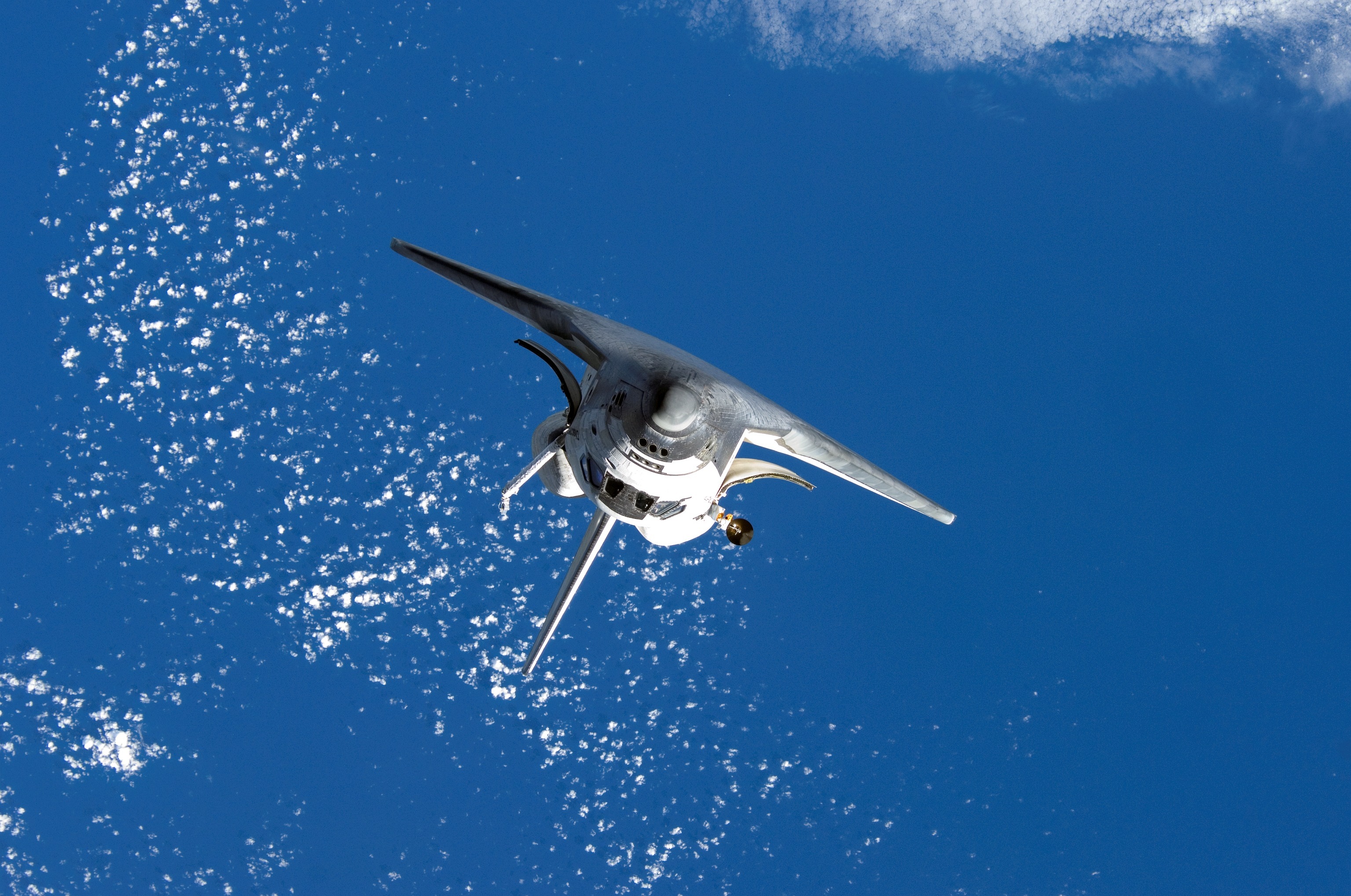
Want to feel a part of the last space shuttle missions? NASA will give you an honorary presence on one of the final two flights to the International Space Station. Upload a head shot to their website, choose your mission, and they'll put your face in space.

The method of transport for the images isn't clear, but judging from previous efforts, odds are they'll be digital. The Stardust mission carried a million names written to a microchip to comet Wild 2 and the Cassini orbiter took 616,400 signatures recorded on a DVD to Saturn.

Even with photos of about 2 centimetres square, the 16,089 participants (at the time of writing) would add up to 58 sheets of A4 paper, printed on both sides.

Nevertheless, your pixels can fly with Discovery on 16 September or Endeavour in November this year. Once the shuttle returns to Earth, you can come back to the Face in Space site to get a flight certificate - signed by none other than the mission commander.

If you can't wait for your face to go to space, NASA is also still offering you the opportunity to "space your face" using a virtual dancing astronaut on a website it launched last year.

Tuesday, March 9, 2010

NASA appeal exposes iPhone app fine print

1 comments
Apple's iPhone is worse for modernization and competition than the PC ever was, according to the Electronic Frontier Foundation, which has published the iPhone developer contract in full.

The deal, which all utilizes of the iPhone SDK must sign, has been roundly criticized for being “one-sided”, giving Apple absolute control over an app's chance of success.

The contract says developers may only sell their apps via Apple's App Store, and that Apple can pull the plug on them at any instant, removing the app from sale and remotely disabling it in user devices.

The contract limit's Apple's liability to a measly $50. If Apple's mobile devices are the future of computing, you can expect that future to be one with more limits on modernization and competition than the PC era that came before, the EFF said.

The contract forbids publication or public debate of itself, so the EFF was forced to file a Freedom of Information Act request against an app-making US agency, in this case NASA, in order to have the deal pierced into the public record.


View This Site: Car Shipping Car Transport Auto Transport

Friday, March 5, 2010

Newest NASA weather satellite launches at Cape Canaveral

0 comments
The $500 million Geostationary Operational Environmental Satellite-P (GOES-P) lifted off from Cape Canaveral in Florida at 6:57 pm on a United Launch Alliance Delta IV rocket which will hold the weather-watching satellite to its orbit around 22,000 miles above the Earth’s surface.

GOES-P is on its method into orbit to begin a 10-year mission to keep a watchful eye on our world, NASA said on the satellite’s launch blog, noting that all systems were performing precisely as expected.

Once it arrive at its orbit, GOES-P will collect and send back to Earth data that will be used by scientists to monitor weather, make forecasts and concern warnings about meteorological incidents. Meteorologists say they couldn’t track storms or issue the suitable warnings without them.

The satellite will also perceive ocean and land temperatures, monitor space weather, relay communications and provide search-and-rescue support. GOES-P is the newest in a long line of GOES satellites, the first of which was launched in 1975.

The spacecraft will undertake testing for the next six months and will finally be an orbiting spare in the Geostationary Operational Environmental Satellite network. The satellites are controlled by the National Oceanic and Atmospheric Administration.

They give vital images of hurricanes and other storms that threaten the United States. The satellite will fall its letter suffix for a number, becoming GOES-15 once it is in space. The launch was passed out by United Launch Alliance, a joint venture of Boeing and Lockheed Martin. This is the 39th winning launch for ULA in 39 months.


View This Site: Car Shipping

Wednesday, March 3, 2010

Chandrayaan Helps Discover More Water on the Moon

0 comments
NASA scientists expect to locate at least 600 million metric tons of water-ice there.

If you thought the Chandrayaan Mission was over a few months ago, please be prepared to be proven incorrect. After scrutinizing evidence garnered from different scientific instruments aboard the Chandrayaan, the NASA had last year announced the presence of "little" amount of water on the moon. It was back then, hailed a very important discovery. A few months down the lane, NASA's Mini SAR search aboard the Chandrayaan has managed to discover significant amount of water on the moon in an area near the north pole of our closest celestial neighbor. The mini SAR is extremely small scientific instrument that weighs less than 10 kgs.

The news was publicized by NASA this week. NASA scientists exposed that they expect to find at least 600 million metric tons of water- ice in the area riddled with craters. The number of these craters is supposed to be around 40 and range in 2 to 15 kms in diameter. These craters are typically colder than the surrounding areas and have been long thought to be the best places to look for water on the moon. Jason Crusan, a NASA spokesperson, said: After analyzing the data, our science team dogged a strong indication of water ice, a finding which will give future missions a new target to further explore and exploit.

The Chandrayaan I mission was India's first effort at sending its own probe to the moon. The spacecraft was launched aboard a customized PSLV rocket back in October 2008. The mission was formally declared abandoned after the ISRO lost contact with the Chandrayaan just a slight less than a year since the Chandrayaan was in Orbit. Though, in a short span of time, the Chandrayaan mission was able to unravel many secrets of the moon, which was hitherto unknown to us - the significant occurrence of water being the latest. Chandrayaan had, on board, eleven investigational payloads of which five were Indian, three from the European Space Agency (ESA), two from U.S. and one was from the Bulgarian Academy of Sciences.


View This Site: Car Shipping

Tuesday, March 2, 2010

Discovery and Crew organize for STS-131 Mission

0 comments

(NASA)Commander Alan Poindexter is set to guide the STS-131 mission to the International Space Station aboard space shuttle Discovery.

Unification Poindexter will be Pilot Jim Dutton and Mission Specialists Rick Mastracchio, Clay Anderson, Dorothy Metcalf-Lindenburger, Stephanie Wilson and Naoko Yamazaki of the Japan Aerospace Exploration Agency.
Discovery will take a multi-purpose logistics module filled with science racks for the laboratories aboard the station.

The mission has three planned spacewalks, with work to include replacing an ammonia tank assembly, retrieving a Japanese experiment from the station’s exterior, and toggle out a rate gyro assembly on the S0 segment of the station’s truss structure.


View This Site: Car Shipping

Mars rover Spirit could wriggle free of its sandy catch

0 comments
A NASA scientist has said that the Mars rover Spirit should be able to wriggle free of its sandy trap on Mars, and not befall a stationary lander mission.

In April 2009, Spirit’s wheels broke through a thin surface crust and got hindered in the loose sand below.

After months of trying disastrously to free the rover, NASA declared on January 26 that Spirit would hereafter be a stationary lander mission rather than a rover.

However, according to a report in New Scientist, rover scientist Ray Arvidson of Washington University in St Louis, Missouri, said that the announcement was “a little bit premature”.

In nine obliges between January 15 and February 8, mission members coaxed the rover into driving backwards by 34 centimetres – “pretty good for a lander”, Arvidson said.

That distant surpasses the mere millimetres of motion Spirit had managed in previous efforts.

The technique concerned swiveling the rover wheels from side to side, which cleared away some of the loose soil beneath the wheels and compacted what remained.

By alternating wheel swiveling with short drives, the rover was able to make slow and steady development.

We only blocked because we ran out of sunlight as winter approached, Arvidson said.

Spirit is hibernating now, with too slight power to continue driving.

After we come out from hibernation in September or October, my thought is that a couple weeks and we’ll back out (of the trap), he said.


View This Site: Car Shipping

Friday, February 19, 2010

Endeavour foliage space station

0 comments
The crews of the linked space shuttle and space station embraced and said farewell Friday as they equipped for Endeavour to begin its two-day trip home after a mission of Olympic proportions.

There were hugs and handshakes all roughly as the six Endeavour astronauts floated one by one out of the International Space Station, where they installed a stunning seven-window observation deck that gives astronauts supreme views of Earth. The hatches between the craft were then conserved in preparation for Friday night's undocking.

We are actually going to enjoy the view. I wish you guys could stay a little longer to participate in that view, the space station's skipper, Jeffrey Williams, told his shuttle friends. Yeah, it's hard to turn away from that window, shuttle commander George Zamka said of the atrium's domed centrepiece, the largest window ever launched into space.

Each of the astronauts spent a few moments alone in the dome late Thursday, taking in what they described as remarkable and stunning views of Earth. Arguably, mankind has been after this view for centuries, this viewpoint, this view of the world, and we finally have it, Zamka said. It culminates just about the meeting complete of the space station, Williams added.

The 11 space flyers teamed up over the past week to fit the dome and a new room, called Tranquility, marking the last of the major space station building blocks. They finished some last-minute packing, and then gathered for a ribbon-cutting ceremony on the eve of Endeavour's undocking.

Zamka offered a plaque to hang in the dome that contained four chips of moon rock and a stone retrieved from the top of Mt. Everest. A former astronaut agreed the moon fragments to the top of Everest last spring.

The lunar chips were composed from the Sea of Tranquility during man's first moon landing in 1969. The chamber was named after that important achievement. Zamka said the rocks will serve as a reminder of man's reach and man's grit as they go out and discover.


View This Site: Car Shipping

Wednesday, February 17, 2010

Patrick, Behnken comprehensive Final STS-130 Spacewalk

0 comments

Mission Specialists Nicholas Patrick and Robert Behnken begin the third and final spacewalk of the STS-130 mission at 9:15 p.m. EST Tuesday and finished at 3:03 a.m Wednesday.

Behnken opened the second of two ammonia loops to allow coolant to flow during Tranquility and disconnected temporary power cables. Patrick installed heater and data cables from the new node to Pressurized Mating Adapter 3, now situated on Tranquility’s outboard docking port.

Next the two spacewalkers removed the lagging from the cupola’s seven windows, and Patrick unconfined launch locks from the windows so Pilot Terry Virts could open the window shutters from inside the module for the first time.

Other tasks for the spacewalk integrated installation of handrails and other spacewalk support equipment on Tranquility, routing video signal converter cables from the S0 Truss to the Zarya module to maintain future Canadarm2 operations from a base on the Russian segment of the station, and removal of clamps and a flex hose rotary coupler on the P1 Truss.

During the spacewalk, station Commander Jeff Williams and other crew members sustained outfitting the Tranquility and cupola modules and performed closeout operations on components of the regenerative environmental control system prior to the last four racks of that system are relocated into Node 3 on Flight Day 11. Early Wednesday morning, Flight Engineer Oleg Kotov replaced a futile vacuum valve in the Russian carbon dioxide removal unit.

The STS-130 mission included three spacewalks and the release of a connecting module that increases the station’s interior space. Node 3, known as Tranquility, provides extra room for crew members and many of the station's life support and environmental control systems. Attached to the node is a cupola, which is a robotic control station with six windows about its sides and another in the center that will provide a panoramic view of Earth, celestial objects and visiting spacecraft. The space station is at present about 90 percent complete.


View This Site: Car Shipping Auto Transport

Friday, October 16, 2009

NASA Offers Media Satellite Interviews Oct. 21 for Ares I-X Launch

0 comments

NASA's Ares I-X Deputy Mission Manager Jon Cowart is available for satellite interviews from 6 to 9 a.m. EDT on Wednesday, Oct. 21. He will conduct the interviews from the rocket's launch pad at NASA's Kennedy Space Center in Florida.

To interview Cowart, reporters should contact Amber Philman at 321-861-0370 by noon on Oct. 20. NASA Television will broadcast b-roll of the Ares I-X from 5:30 to 6 a.m. at analog satellite AMC-6 at 72 degrees west longitude, transponder 5C, 3800 MHz, vertical polarization, with audio at 6.8 MHz.

The Ares I-X rocket is targeted to launch Tuesday, Oct. 27 on a 28-mile high flight test. The flight test will provide NASA with an early opportunity to test and prove flight characteristics, hardware, facilities and ground operations associated with the Ares I rocket.

In 2007, Cowart became the senior project manager responsible for all modifications to the launch pad, Vehicle Assembly Building, and mobile launcher platform for Ares I-X. In December 2008, he was chosen as the deputy mission manager for Ares I-X. As part of the Mission Management Office, he is responsible for the Ares I-X flight test mission. Cowart graduated from Georgia Tech in 1983 with a bachelor's degree in aerospace engineering and an Air Force commission.

For NASA TV downlink information, schedules and links to streaming video, visit:

http://www.nasa.gov/ntv

To follow the Ares I-X flight test on Twitter, go to:

http://www.twitter.com/NASA_Ares_I_X

For information about Ares I-X, visit:

http://www.nasa.gov/aresIX